

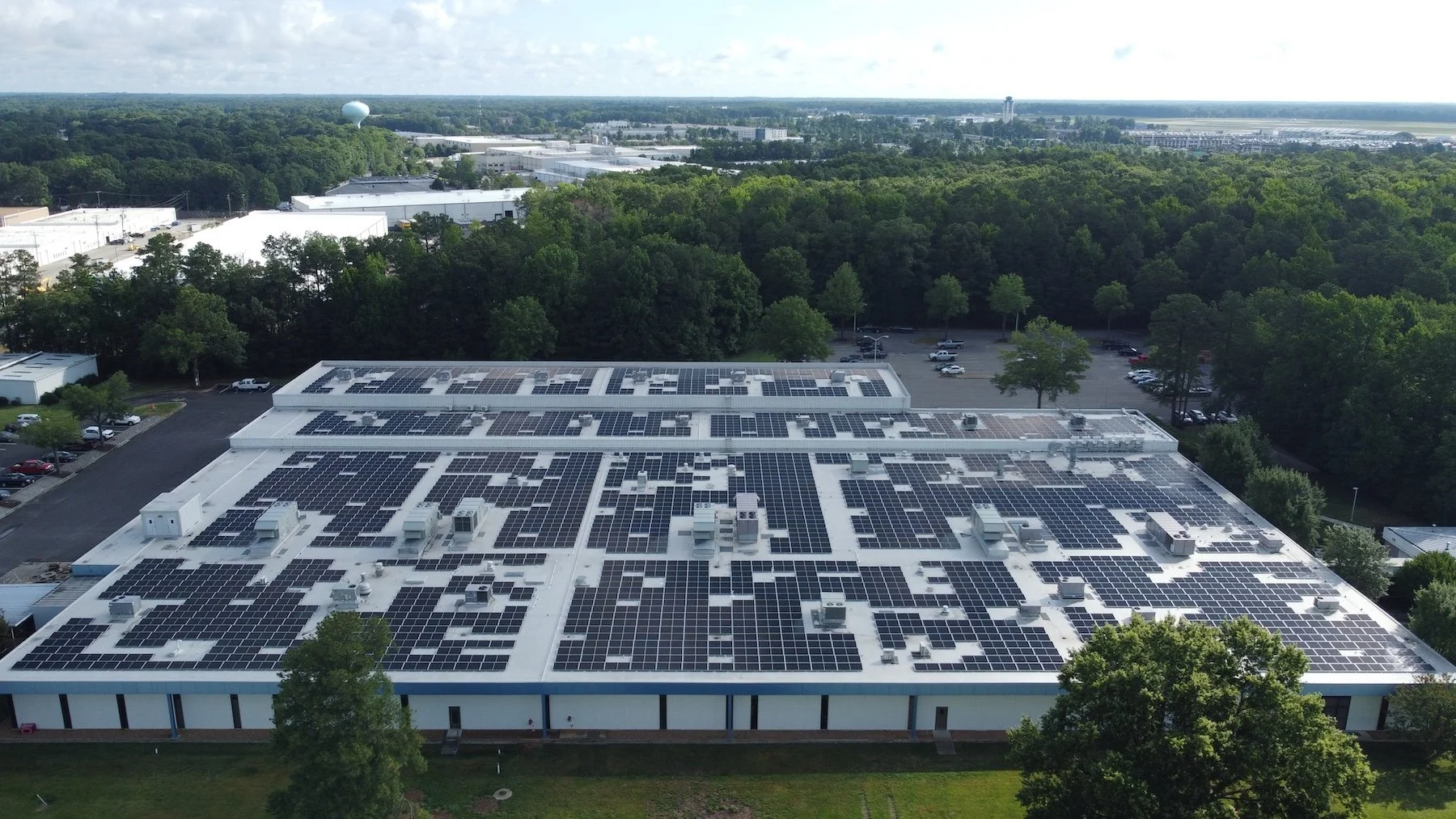
SOLAR FOR MANUFACTURERS:
WHAT YOU NEED TO KNOW
A buyer’s guide for Virginia & Mid-Atlantic industrial facilities
If you run a manufacturing facility in Virginia or the Mid-Atlantic, energy has been, and will continue to be, one of your top cost centers for years to come. Between rising utility rates, AI-driven grid demand, and new tariff pressures, power costs are becoming less predictable every year.
SOLAR IS ONE OF THE FEW SOLUTIONS THAT GIVES MANUFACTURERS BACK CONTROL.
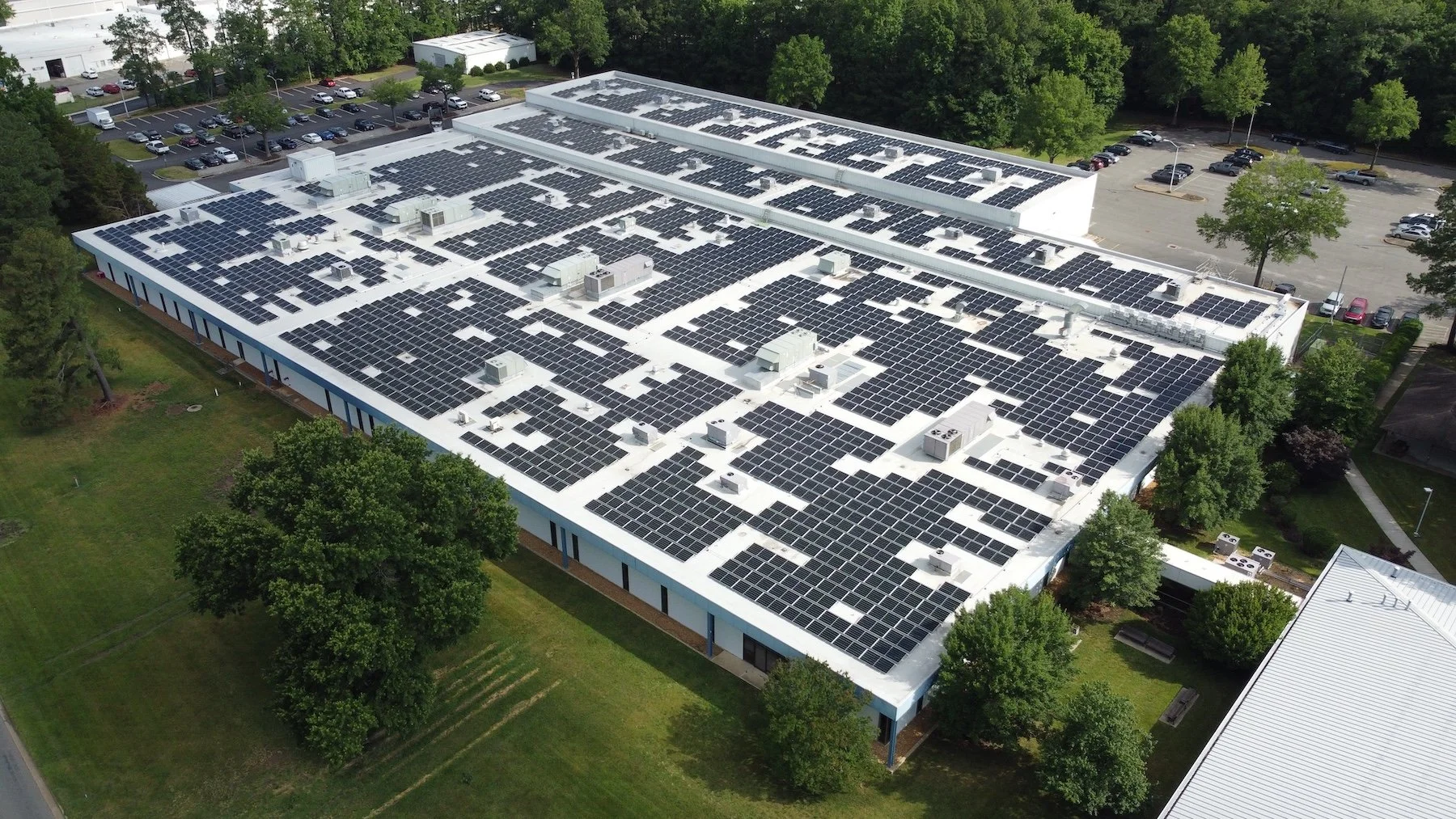
At Commonwealth Power, we see it every day: companies use onsite solar to stabilize their operating budgets, reduce exposure to unpredictable grid costs, and reallocate funds to more strategic initiatives. They free up capital for production, people, and growth. And unlike many other energy upgrades that come with long timelines or ongoing fuel costs, solar is proven, reliable, and fast to deploy. Even with shifting federal incentives, it remains the lowest-cost power source in the U.S.
This guide is designed to make solar feel clearer, easier, and more grounded in the realities of running an industrial facility. These are the questions manufacturers ask us most and the answers that help them move forward with confidence.
When you’re ready to talk about solar for your facility, book a meeting or call us at (804) 921-4557.
-
With more than 150 completed projects, we are a deeply experienced partner who is big enough to get the job done and small enough to give each project senior-level leadership.
Commercial and industrial customers have trusted us to simplify the financials, manage every detail, and deliver high-quality solar systems that perform exactly as promised—without burdening their teams.Solar Tradecraft
Our in-house crews take pride in quality work, jobsite professionalism, and systems that stand the test of time.
Right-Sized for Manufacturers
Built for manufacturing and industrial clients who need a partner who can scale, a team that executes with precision, and leadership who personally drives success from start to finish.
Reliability
We deliver on time, on budget, and with no surprises thanks to a seasoned in-house team that shows up and gets it done right.
Long-Term Value
Our systems are engineered for performance, savings, and resilience, which means higher ROI and fewer headaches for years to come.
-
Energy is becoming a strategic risk.
Electricity demand is surging due to AI, data centers, and electrification — especially on our mid-Atlantic grid.
Dominion forecasts 5.5% annual rate increases for the next decade, with demand doubling by 2039.
Solar lets manufacturers lock in predictable energy to reduce costs for 25–35 years.
Solar reduces operating expenses and shields facilities from rate volatility, grid constraints, and capacity charges.
For most industrial facilities, solar is more than a nice-to-have. It’s a long-term hedge against a rapidly changing energy landscape.
-
Most projects pencil out in 4–7 years, depending on:
Load profile
Electricity rates
System size
Federal and State Incentives
Roof suitability
Facilities with long operating hours and predictable loads — like manufacturing — typically see the strongest payback profiles in the commercial solar market.
-
Not with a well-run EPC.
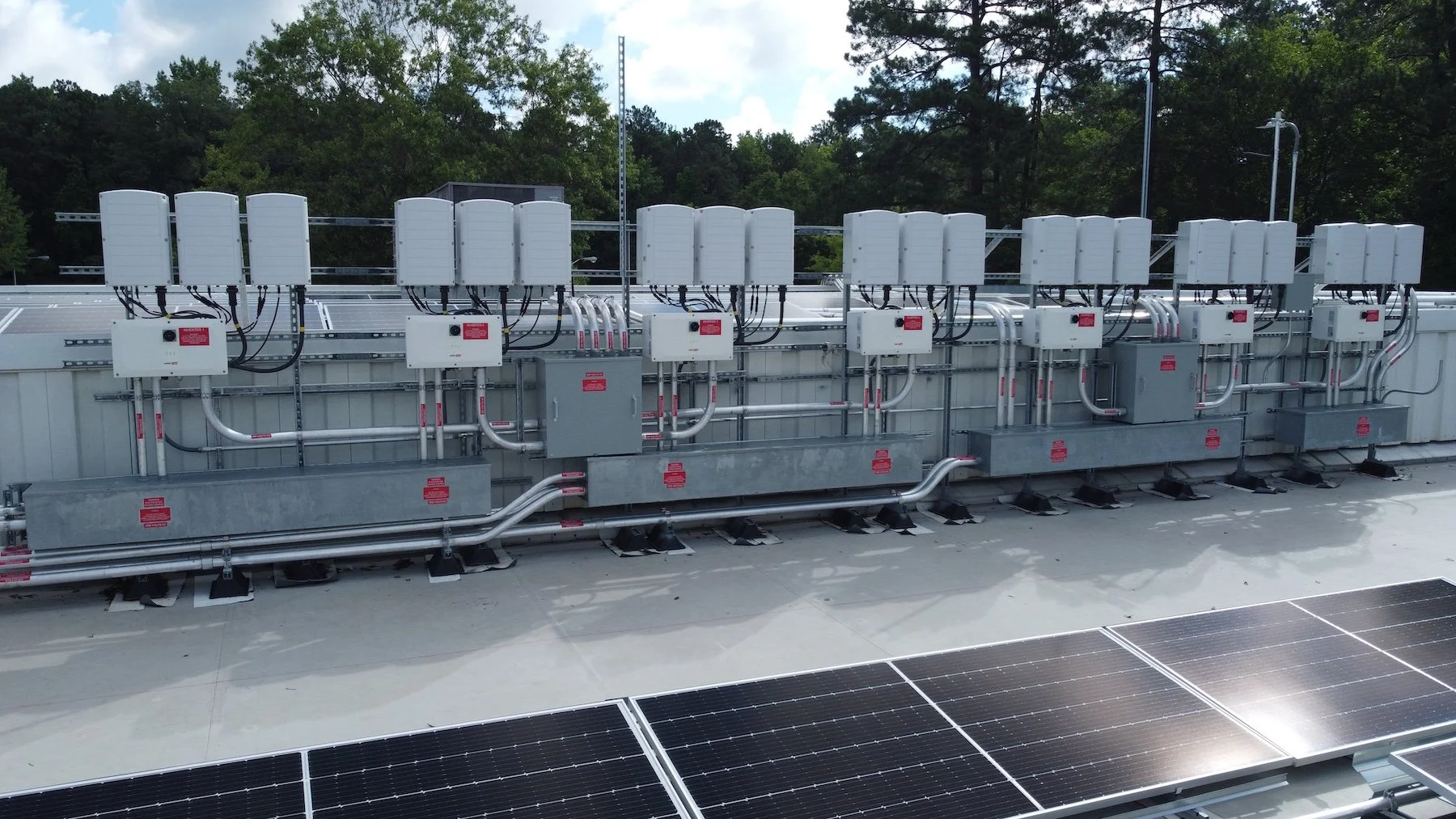
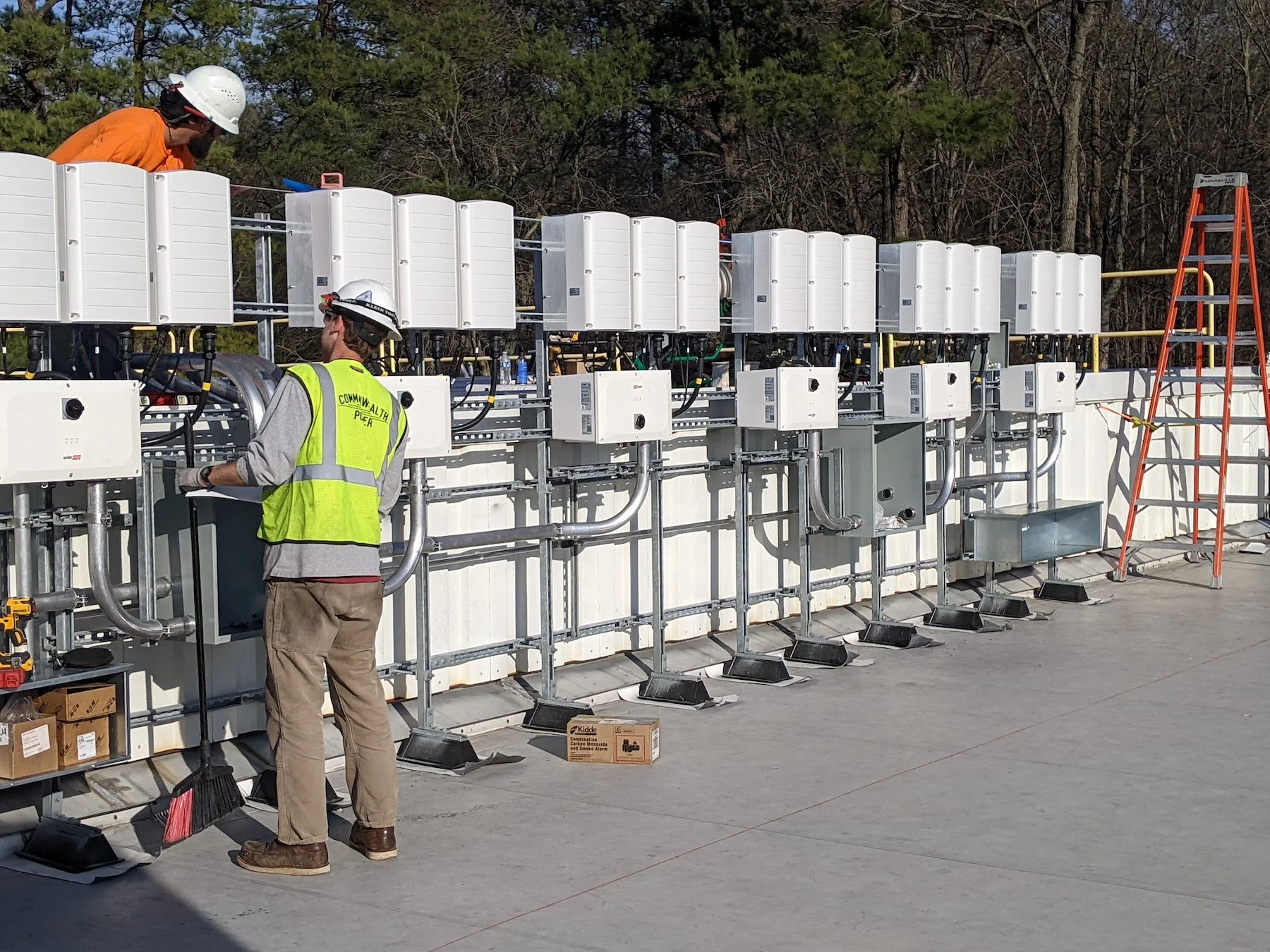
Commonwealth Power delivers turnkey solar installations while avoiding interfering with your core operations. We accomplish this with:
Installation schedules designed with your operations in mind
Clear, proactive communication with facility managers and operators
Project logistics tailored to your facility
Safety protocols aligned with industrial standards
-
Most manufacturing projects land between 9–12 months, with an average of 3 months on-site installation. Timelines can be influenced by on:
Equipment lead times
Permitting
Utility interconnection timelines
Facility complexity
Roof readiness
Our project managers build clear timelines so there are no surprises.
-
Before any work begins, a structural analysis will ensure your solar array is engineered to meet the latest building codes.
We evaluate:
Structural loads and integrity
Roof age
Membrane type
Drainage and mechanical equipment
Future replacement timelines
If needed, we will coordinate with roofing partners to align roof work and solar installation in a cost-efficient, low-disruption way.
-
Starting in 2026, new Foreign Entity of Concern (FEOC) rules will shape what qualifies for federal incentives. At the same time, the U.S. is rapidly expanding domestic solar manufacturing.
Here’s what this means for you:
U.S.-made equipment will be more available, reducing supply-chain risk.
Some equipment costs may temporarily increase, but not enough to outweigh solar’s long-term savings.
Commonwealth Power sources equipment strategically to maintain competitive pricing and reliability.
Most manufacturers can still qualify for the 30% federal solar tax credit when projects meet the current requirements.
Bottom line: tariffs are reshaping the supply chain, not shrinking the solar opportunity.
-
Manufacturers increasingly face sustainability expectations from:
OEMs
Retailers
Public companies
Government contracts
Solar helps you:
Reduce Scope 1 and 2 emissions
Improve your Scope 3 profile for upstream customers
Stay competitive with OEM and customer sustainability requirements
Avoid greenwashing with real, verifiable data
Demonstrate strong energy stewardship to your workforce and community
Many clients now market products as “Made with solar power”, and buyers take notice.
-
Absolutely. Solar remains the cheapest and fastest-to-deploy power source for manufacturers primarily due to two factors: predictable cost savings and risk mitigation.
While incentives like the federal tax credit accelerate your ROI, solar is unbeatable because:
Lowest operational cost: It has zero fuel cost, making it the lowest long-term operational expense for power generation. It is also the fastest energy solution to deploy, meaning immediate savings.
Effective hedge against risk: Generating power behind the meter shields your operating budget from volatile utility rates and directly reduces expensive demand charges (often the largest portion of a commercial bill).
A properly sized system typically reduces total utility expenses by 40%–60% for 25+ years, even if fixed fees and transmission charges remain.
In short: incentives help, but they’re not what makes solar cost-effective.
-
Three common models:
1. Direct Purchase (CapEx)
Highest long-term ROI
You capture all incentives
Best for strong balance sheets
2. Solar Lease
No upfront cost
Predictable monthly payments
Maintenance included
Introduction to trusted financing partners
3. Power Purchase Agreement (PPA)
No capital required
You buy the power, not the system
Common for large facilities with stable load profiles
We help you model all options to find the best fit.
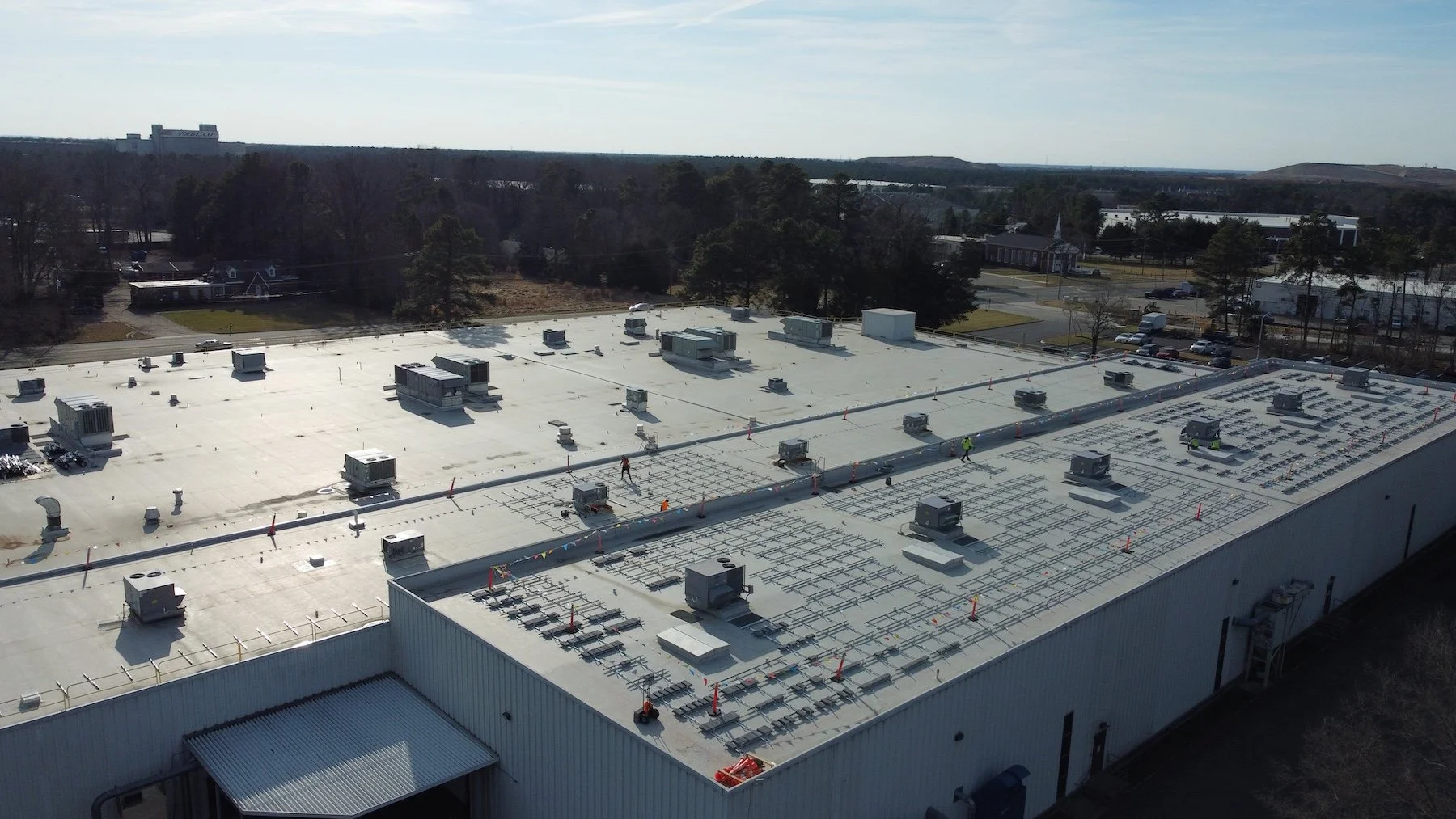
Ready to understand what solar looks like for your facility?
Get a custom assessment with clear numbers, timelines, and recommendations.
Or call us directly at (804) 573-9513